
Most cats live in mild dehydration. Small changes shift that fast.
The Hydration Problem Most Cat Parents Miss
Cats evolved as desert hunters. Their wild ancestors got most of their daily water from prey, not from open water sources, which means a cat’s thirst drive is famously weak compared to yours. That biology hasn’t caught up to the modern indoor cat eating dry kibble out of a ceramic bowl.
A healthy cat needs around 60ml of water per kilogram of body weight each day. Research from the Royal Veterinary College links chronic low water intake to urinary and kidney issues that build quietly over years.
If you’ve ever wondered how long can cats go without water? you’ll find the answer is shorter than most cat parents realise. Hydration deficits show up well before your cat looks unwell.
Most of the time, fixing it is about hydration habits at home.
How you offer your cat water at home decides whether they drink enough or quietly sit below the hydration line.
Signs Your Cat Is Quietly Dehydrated
Mild dehydration rarely shows up as obvious illness. The Cornell Feline Health Center tells cat parents to watch for a cluster of smaller signs rather than a single dramatic one.
-
Tacky gums, sunken eyes, slow skin-pinch recovery on the scruff.
-
Concentrated dark urine, fewer litter tray visits, signs of urinary tract strain.
-
Dry flaky coat, reduced appetite, general lethargy.
-
Sudden new interest in dripping taps, plant saucers, the toilet bowl.
A single sign on its own is rarely serious. If you spot two or three together across a week, it’s worth a vet conversation and a closer look at how water is presented at home.
Why Standard Water Bowls Fail Cats
A standard bowl is the cat-care equivalent of a setting nobody questions. It doesn’t work as well as it looks.
Stagnant water collects dust, loose hair and bacterial biofilm within hours. Your cat reads still water as old water, an instinct inherited from ancestors who avoided contaminated pools.
There are two more problems. Cats dislike drinking near their food because that pairing meant prey contamination in the wild, so a bowl placed beside the feeding station gets ignored. Narrow, deep bowls also cause whisker fatigue. Sensitive whiskers press on the rim with every sip, and many cats give up rather than push through it.
How a Flowing Fountain Changes Cat Drinking Behaviour
Move from a still bowl to flowing water and the same cat often drinks measurably more.
Moving water reads as fresher to a cat, and the visual and audio cues of a small stream trigger the natural curiosity that a static bowl never can.
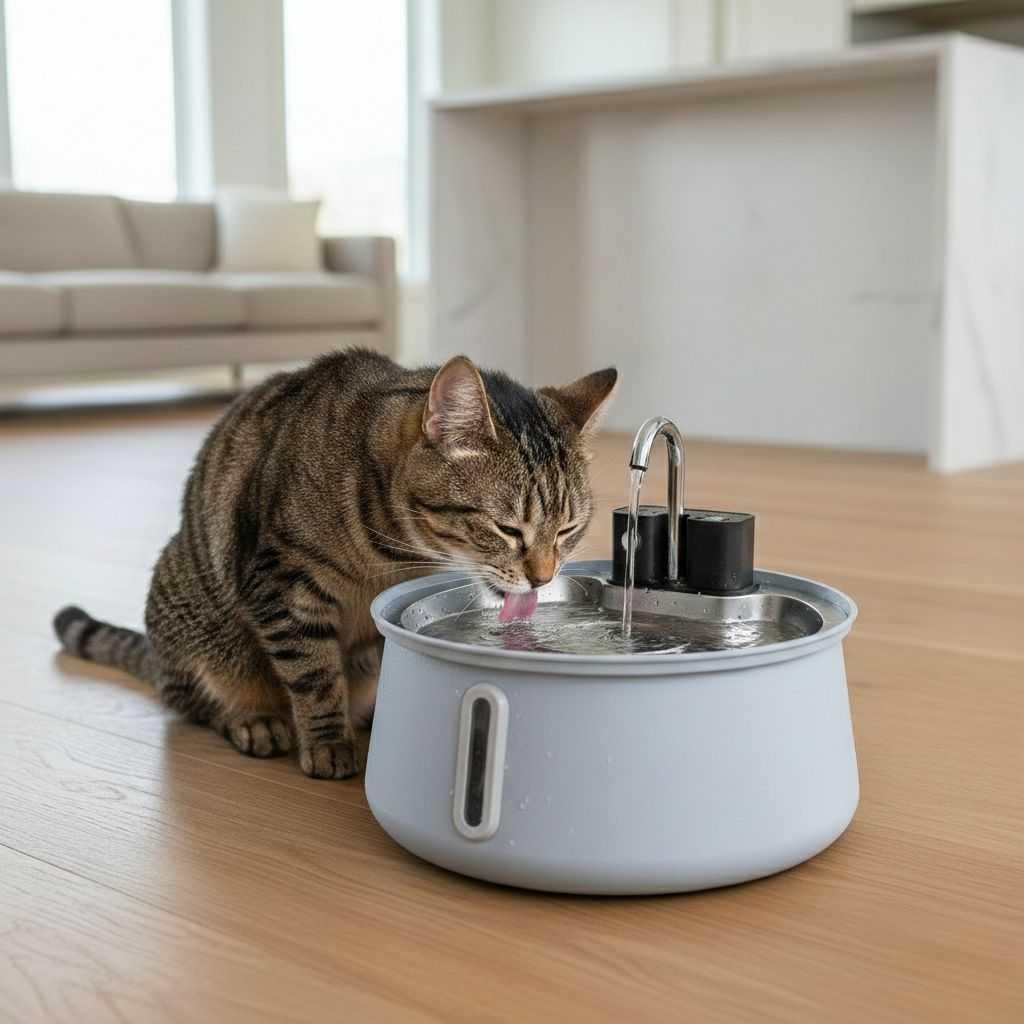
Modern water fountains for cats, such as those built by KittySpout, are designed around the exact problems a standard bowl creates. A wide, shallow basin removes whisker pressure, and continuous filtered flow keeps the water visibly clean. The pump is quiet enough not to spook a skittish cat.
None of this is magic. It’s a small environmental change that removes the friction between your cat and their water bowl, and most cats respond inside the first few days of switching to a fountain.
Simple Habits That Boost Your Cat’s Water Intake
A fountain helps on its own, and helps more when paired with a few small habit changes. Hydration is rarely fixed by one intervention, but by a small stack of low-effort tweaks that compound over time.
-
Set up two or three water stations across the home, kept well away from food bowls and litter trays so location instinct doesn’t get in the way.
-
Add a wet-food meal to the daily rotation. A pouch or tin lifts moisture intake significantly without any behaviour change needed from your cat.
-
Refresh the fountain water daily and deep-clean the unit weekly. Ceramic units stay cleaner for longer than plastic and resist the biofilm that puts cats off the smell.
-
Watch where your cat naturally chooses to drink, whether that’s the corner of the kitchen or the spot near a quiet window, and let that observation decide where the main fountain lives.
A cat that drinks closer to its actual daily need has healthier kidneys and far fewer urinary infections over a lifetime.